Preserving the Past, Securing the Future project partners: LRE Foundation, mascontour GmbH, Juno Beach Centre, Fondazione Campus – with contributions from project participants, October 2026
The Sustainable Tourism Practices Handbook, developed through the Preserving the Past, Securing the Future (PPSF) project, provides practical guidance for integrating sustainability into the cultural heritage and remembrance tourism sector, with a particular focus on Second World War heritage sites. Drawing on sector research, needs and market analyses, case studies, and the shared experiences of sector professionals across Europe, the handbook addresses the environmental, socio-cultural, and economic dimensions of sustainability. It presents practical recommendations, step-by-step guidance, and implementation resources to support museums, memorials, and remembrance organisations in adopting more sustainable practices, including reducing environmental impacts, strengthening community engagement, improving accessibility, diversifying income sources, and enhancing visitor management. By highlighting successful initiatives and encouraging collaboration, knowledge exchange, and continuous improvement, the handbook aims to empower heritage organisations of different sizes and capacities to develop resilient sustainability strategies, safeguard cultural heritage, and promote responsible tourism while preserving the educational and commemorative value of remembrance sites for future generations.
Preserving the Past, Securing the Future (PPSF) project, mascontour GmbH (edited by LRE Foundation), August 2025
This research was done as part of the initial assessment report of the EU co-funded Preserving the Past, Securing the Future project. The aim was to establish the current situation of sustainability within the WWII remembrance and wider cultural heritage sector, in order to design the PPSF training programme for stakeholders in the sector and foster sustainability practices.
International Council of Museums, December 2020
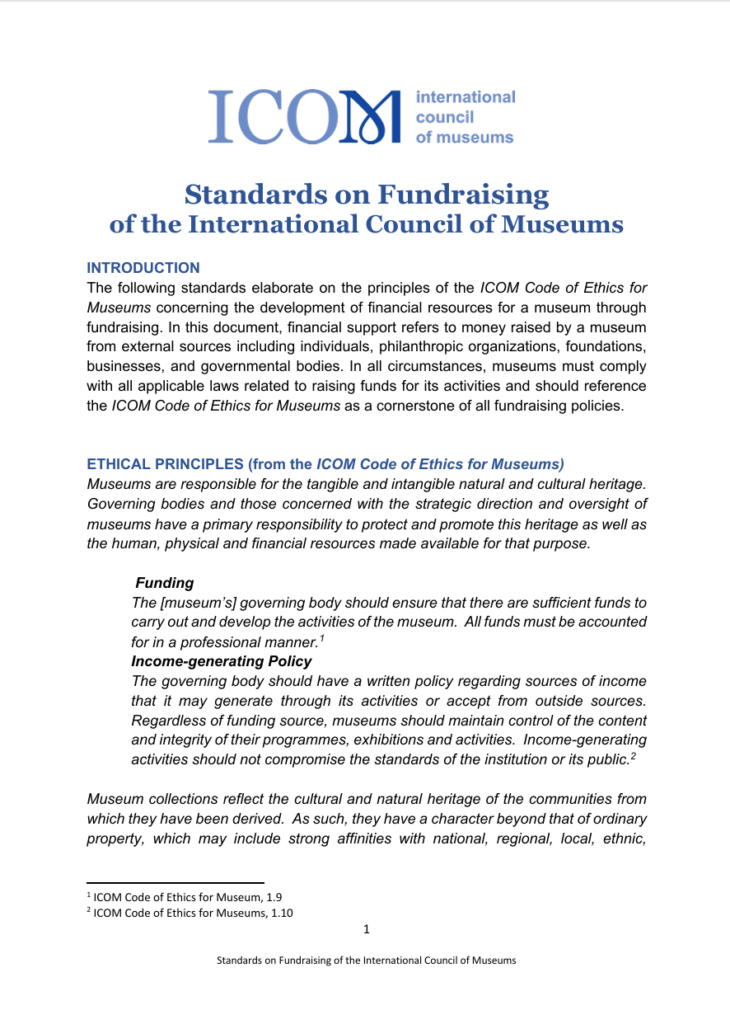
The following standards elaborate on the principles of the ICOM Code of Ethics for Museums concerning the development of financial resources for a museum through fundraising. In this document, financial support refers to money raised by a museum from external sources including individuals, philanthropic organisations, foundations, businesses, and governmental bodies. In all circumstances, museums must comply with all applicable laws related to raising funds for its activities and should reference the ICOM Code of Ethics for Museums as a cornerstone of all fundraising policies.
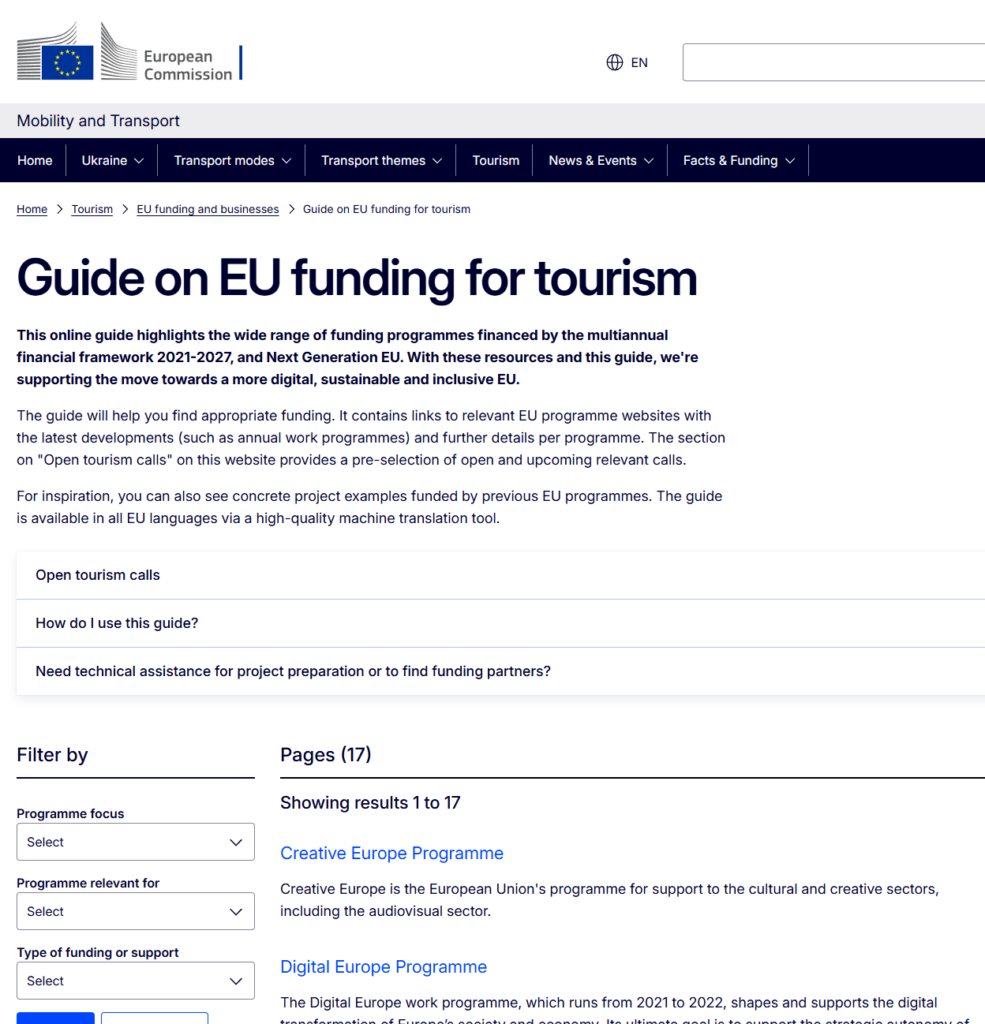
European Commission, 2026
This online guide highlights the wide range of funding programmes financed by the multiannual financial framework 2021-2027, and Next Generation EU. With these resources and this guide, we’re supporting the move towards a more digital, sustainable and inclusive EU.
Pearl Initiative, 2017
This guide is part of Pearl Initiative’s Corporate Governance in MSMEs programme. The goal of the programme is to provide the Micro, Small and Medium Sized Enterprises (MSME) community with tools and references that will help them implement practical and effective corporate governance capabilities commensurate with their specific internal requirements. Structured and cost effective internal corporate governance capabilities will often enhance the efficiency, productivity, and resilience of any business, and allow leadership to maintain control yet focus on key business requirements such as strategy and growth.
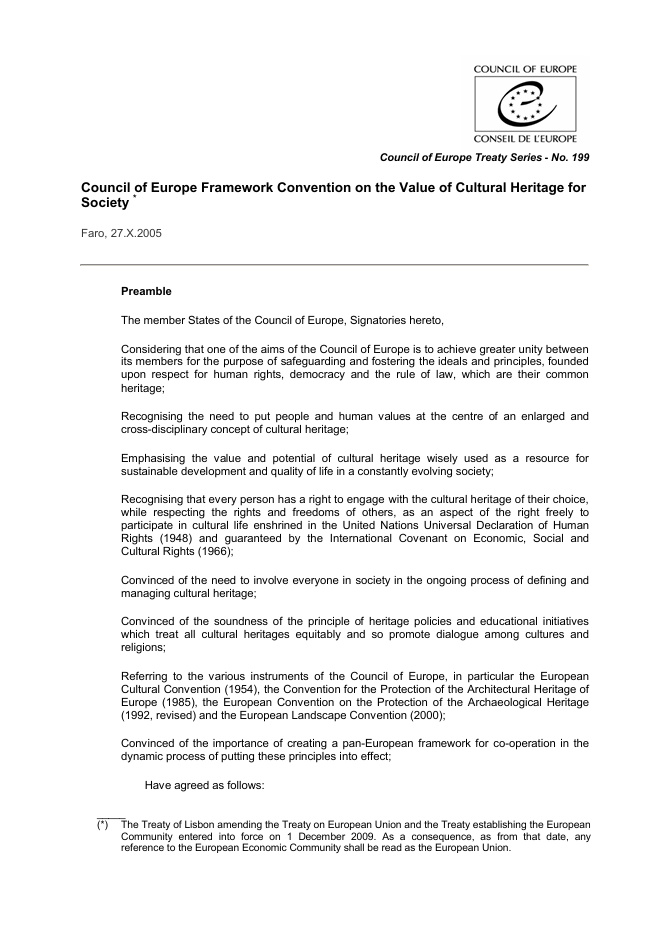
Council of Europe, October 2005
A convention agreed upon by the member States of the Council of Europe on the Value of Cultural Heritage for Society, including the following:
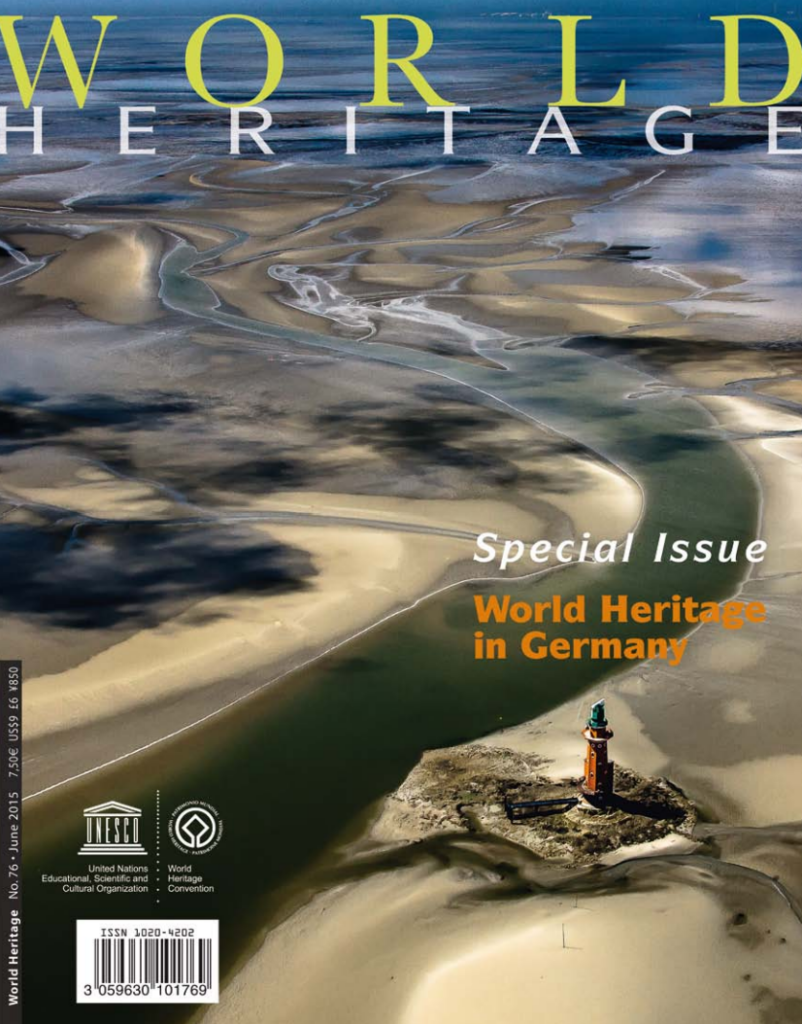
World heritage Review, UNESCO, Claudia Brincks-Murmann, Kerstin Manz & Birgitta Ringbeck, 2015
This is a special issue of the World Heritage Review, dedicated to world heritage in Germany, both natural and cultural. The contents page shows all articles in this edition of the journal, however it includes, in particular, two interesting articles:
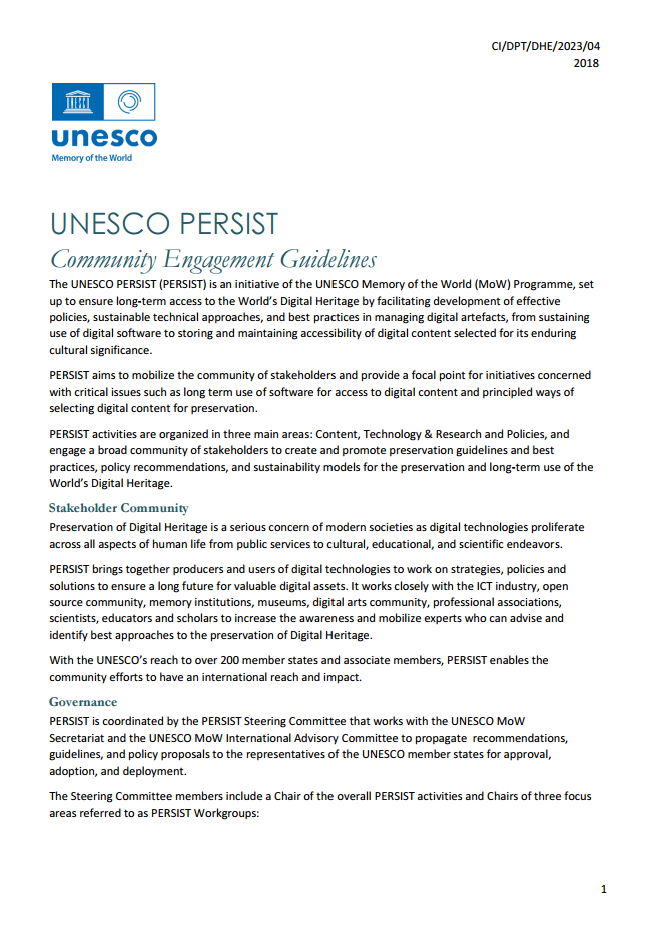
UNESCO, 2018
The UNESCO PERSIST (PERSIST) is an initiative of the UNESCO Memory of the World (MoW) Programme, set up to ensure long-term access to the World’s Digital Heritage by facilitating development of effectivepolicies, sustainable technical approaches, and best practices in managing digital artefacts, from sustaining use of digital software to storing and maintaining accessibility of digital content selected for its enduring cultural significance.PERSIST aims to mobilize the community of stakeholders and provide a focal point for initiatives concerned with critical issues such as long term use of software for access to digital content and principled ways of selecting digital content for preservation.
International Council of Museums, October 2004
The cornerstone of International Council of Museums (ICOM) is the ICOM Code of Ethics for Museums. It sets minimum standards of professional practice and performance for museums and their staff. In joining the organisation, ICOM members undertake to abide by this Code.
The ICOM Code of Professional Ethics was adopted unanimously by the 15th General Assembly of ICOM in Buenos Aires (Argentina) on 4 November, 1986. It was amended by the 20th General Assembly in Barcelona (Spain) on 6 July 2001, retitled ICOM Code of Ethics for Museums, and revised by the 21st General Assembly in Seoul (Republic of Korea) on 8 October, 2004. First published in the three official languages of ICOM, the Code of Ethics has been translated into numerous other languages by ICOM’s committees.
United Nations, Transforming our world: the 2030 Agenda for Sustainable Development with its 17 SDGs was adopted at the UN Sustainable Development Summit in New York in September 2015.
The 2030 Agenda for Sustainable Development, adopted by all United Nations Member States in 2015, provides a shared blueprint for peace and prosperity for people and the planet, now and into the future. At its heart are the 17 Sustainable Development Goals (SDGs), which are an urgent call for action by all countries – developed and developing – in a global partnership. They recognize that ending poverty and other deprivations must go hand-in-hand with strategies that improve health and education, reduce inequality, and spur economic growth – all while tackling climate change and working to preserve our oceans and forests.
Global Sustainable Tourism Council (GSTC), November 2024.
The Global Sustainable Tourism Council (GSTC Attraction Standard) aims to establish global sustainability standards for attractions, guiding businesses such as theme parks, museums, and national parks toward sustainable practices. The GSTC Attraction Standard are the minimum that any attraction business should aspire to reach. They are organised around four main themes: effective sustainability planning, maximizing social and economic benefits for the local community, enhancing cultural heritage, and reducing negative impacts on the environment. They have applicability to the entire attraction industry. TheGSTC Attraction Standard has been developed for the attractions sector, including national parks and businesses like theme parks, museums, and other similar entities. The development process was a 14-month-long journey from September 2023 to November 2024, with support from the Singapore Tourism Board (STB).
Adopted by the International Council on Monuments and Sites (ICOMOS) Annual General Assembly (Bangkok, Thailand) in November 2022.
Profound growth and disruption in global tourism, including cultural heritage tourism, has necessitated the revision of the ICOMOS International Charter for Cultural Tourism (1999). The process has resulted in this ICOMOS International Charter for Cultural Heritage Tourism (2021): Reinforcing cultural heritage protection and community resilience through responsible and sustainable tourism management (hereinafter “the Charter”), which complements and updates the previous one. In addition to recognising the intensified tourism use of cultural heritage places and destinations, this Charter addresses increasing concerns about the degradation of cultural heritage along with social, ethical, cultural, environmental and economic rights issues associated with tourism.
Prepared under the Auspices of the ICOMOS International Scientific Committee on Interpretation and Presentation of Cultural Heritage Sites
Since its establishment in 1965 as a worldwide organisation of heritage professionals dedicated to the study, documentation, and protection of cultural heritage sites, ICOMOS has striven to promote the conservation
ethic in all its activities and to help enhance public appreciation of humanity’s material heritage in all its forms
and diversity…The purpose of this Charter is therefore to define the basic principles of Interpretation and Presentation as essential components of heritage conservation efforts and as a means of enhancing public appreciation and understanding of cultural heritage sites.
Oekom, Karen Hamann, Anna Baumann, Daniel Löschinger, 2016.
Whether we eat a vegetarian meal, ride our bikes, or install a solar panel: Constantly, we are making decisions in the interest of our environment – or not. What guides and motivates our actions is explored by environmental psychology. Based on a psychological model, this handbook about the psychology of environmental protection explains how to understand and promote sustainable actions more successfully. It is the first book in German to summarise environmental psychology’s treasure of knowledge in a scientifically profound and practical way. Each chapter is dedicated to an important topic like self-efficacy, social norms, and emotions. Guiding questions and examples that are close to everyday life facilitate a direct implementation in environmental protection. The handbook is directed at all people that want to design their environmental projects and communication more effectively – pedagogues, urban gardeners, environmental activists, or employees of environmental organisations.
2011, United Nations
This publication contains the “Guiding Principles on Business and Human Rights: Implementing the United Nations ‘Protect, Respect and Remedy’ Framework”, which were developed by the Special Representative of the Secretary-General on the issue of human rights and transnational corporations and other business enterprises. The Special Representative annexed the Guiding Principles to his final report to the Human Rights Council (A/HRC/17/31), which also includes an introduction to the Guiding Principles and an overview of the process that led to their development. The Human Rights Council endorsed the Guiding Principles in its resolution 17/4
of 16 June 2011.
Each year European public authorities spend the equivalent of 16% of the EU Gross Domestic
Product on the purchase of goods, such as office equipment, building components and
transport vehicles; services, such as buildings maintenance, transport services, cleaning and
catering services and works. Public procurement can shape production and consumption
trends and a significant demand from public authorities for “greener” goods will create or
enlarge markets for environmentally friendly products and services. By doing so, it will also
provide incentives for companies to develop environmental technologies.
European Commission, July 2008
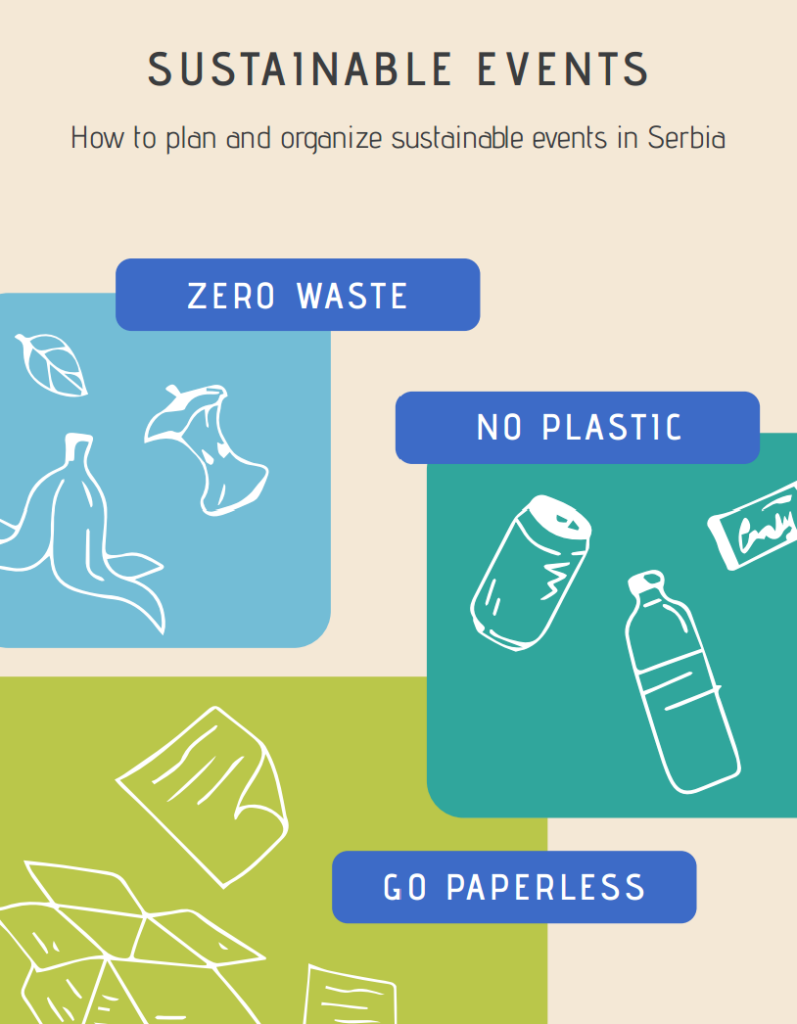
United Nations Development Programme, April 2023
The purpose of the Guide is to provide recommendations for organizing environment-friendly, sustainable events. The Guide should help the potential users by proposing measures in the areas of event promotion, mobility, energy and water consumption, communication, catering, waste reduction, and waste separation.
Champions 12.3, Liz Goodwin and Stacy Blondin of the World Resources Institute; Genevieve Bassett, Mark Roberts, Leah Wistrand, Helen White and Richard Swannell of WRAP; and Emily Broad Leib, Regan Plekenpol, and Hana Rouse of the Harvard Food Law Policy Clinic. August 2022
Food loss and waste occurs throughout the food system – from farm through to fork. This guide focuses on food waste from households which is a significant issue in many countries. The causes of food waste at household level are complex. There are many drivers and many behaviours which lead to food being wasted. The main reasons for food being wasted are: (1) food not being used in time, possibly because of sub-optimal storage, lack of planning, lack of skills and knowledge or (2) through having leftovers which are then not used.
Champions 12.3, Craig Hanson (Global Director of Food, Forests, and Water at WRI)
and Peter Mitchell (Head of Economics, WRAP), March 2017
Prepared on behalf of Champions 12.3, The Business Case for Reducing Food Loss and Waste analyses the financial impacts of historical food loss and waste reduction efforts conducted by a country, a city, and numerous companies. The results show that the financial benefits of taking action often significantly outweighed the costs. This publication also identifies a number of complementary strategic benefits of reducing food loss and waste. It concludes by outlining how governments and companies can embark on reduction efforts.
In: A Guide to Meadows and Wildflowers in Burial Grounds
Authors: The Prince of Wales Charitable Fund
Date: 2019
Flowery grasslands with their breath-taking beauty and buzz of wildlife have almost vanished from our countryside. Once commonplace, now only fragments remain. Incredibly, churchyards and cemeteries are sometimes the last refuge in the parish for this wonderful but increasingly rare habitat. Maybe your churchyard, chapel yard or cemetery retains some of this precious grassland? If so it is worth treasuring. Here we provide information about the rich natural and cultural history of flowery grasslands. You can read about the types of flowers that you may expect to find, as well as the link that many have to Christianity. We give practical guidance on how best to look after your grassland as well as a way of assessing its condition. Finally, we will share ideas of how to celebrate it with your parishioners and visitors.
More information on: Meadows & Wildflowers – Caring For God’s Acre – the conservation charity for burial grounds across the UK
In: Annals of Tourism Research, Volume 74
Authors: Eva Parga Dans and Pablo Alonso González
Date: 2019
This study aims to identify the factors that constitute the social value of heritage in relation to sustainable tourism. To do so, this paper provides a theoretical contribution by unifying the fields of heritage management and sustainable tourism through a mixed-method approach. It showcases the social dimension of the World Heritage Site of Altamira, Spain, combining qualitative and quantitative techniques. Research findings provide information about the multiple factors determining the social value of heritage, namely: existential, aesthetic, economic, and legacy values and the risks associated with underestimating the contemporary social value. Ultimately, this research paves the way for improving normative approaches toward sustainable tourism and, offers practical solutions to the challenges faced by the Altamira and other World Heritage Sites.
In: ISPRS Journal of Photogrammetry and Remote Sensing
Authors: Wen Xiao, Jon Mills, Gabriele Guidi, Pablo Rodríguez-Gonzálvez, Sara Gonizzi Barsanti, Diego González-Aguilera
Date: 2018
Cultural Heritage (CH) is recognised as being of historical, social, and anthropological value and is considered as an enabler of sustainable development. As a result, it is included in the United Nations’ Sustainable Development Goals (SDGs) 11 and 8. SDG 11.4 emphasises the protection and safeguarding of heritage, and SDG 8.9 aims to promote sustainable tourism that creates jobs and promotes local culture and products. This paper briefly reviews the geoinformatics technologies of photogrammetry, remote sensing, and spatial information science and their application to CH. Detailed aspects of CH-related SDGs, comprising protection and safeguarding, as well as the promotion of sustainable tourism are outlined. Contributions of geoinformatics technologies to each of these aspects are then identified and analysed. Case studies in both developing and developed countries, supported by funding directed at the UN SDGs, are presented to illustrate the challenges and opportunities of geoinformatics to enhance CH protection and to promote sustainable tourism. The potential and impact of geoinformatics for the measurement of official SDG indicators, as well as UNESCO’s Culture for Development Indicators, are discussed. Based on analysis of the review and the presented case studies, it is concluded that the contribution of geoinformatics to the achievement of CH SDGs is necessary, significant and evident. Moreover, following the UNESCO initiative to introduce CH into the sustainable development agenda and related ICOMOS action plan, the concept of Sustainable Cultural Heritage is defined, reflecting the significance of CH to the United Nations’ ambition to “transform our world”.
In: Sustainability, 14(9), 5586
Authors: Radulović, Veljko, Aleksandra Terzić, Dragana Konstantinović, Miljana Zeković, and Igor Peško
Date: 2022
The noticeable urgent need for the preservation of collective and cultural memory in Europe, coupled with a fear of loss of important aspects of heritage, indicates the importance of educating the youth who will become future policymakers in the field. Analyses of the survey conducted through this research show the current perspective of youth on the typology of World War II memorials on the territories of the former republics, now independent states, of SFR Yugoslavia in Southeast Europe. Targeting architecture and civil engineering students as a specific youth group who are directly involved in learning about the built memorial structures, as well as the phenomenological background of space, creation of place and memories, resulted in a qualitative observation of the group’s understanding and judgement of the topic. This article investigates the level of knowledge and emotional response to memorial heritage within the target group. It addresses relevant issues of age, gender, level of study, and respondents’ backgrounds, demonstrating the existence of an initial interest in memorial heritage among the architecture-oriented youth. With an additional focus on a possible active role in heritage preservation and future placement, the research indicates a segment in the youth’s comprehension of valuable memorial heritage that needs to be improved.
In: Environmental Sciences Commons
Authors: Philip Swintek
Date: 2006
This article examines the lasting environmental consequences of World War II across the Pacific, focusing on the impact of naval battles, chemical contamination, and military waste. Decades later, these remnants continue to pose serious ecological threats. Thousands of sunken vessels, many still leaking oil and other hazardous substances, endanger marine biodiversity. Meanwhile, unexploded ordnance and abandoned military structures contribute to pollution and pose risks to both land and sea environments.
Heavy metal contamination and habitat destruction further complicate restoration efforts, making environmental recovery a long-term challenge. These war-related impacts highlight the difficulties of mitigating historical damage while ensuring the sustainability of the region’s natural resources. Addressing these legacies remains crucial for protecting the Pacific’s ecosystems and the communities that depend on them.
In: MDPI, Sustainability, 8(3), 261
Authors: Vaughn Schmutz and Michael A. Elliott
Date: 2016
The research examines how concerns about tourism and sustainability emerged, how they evolved over time, and how these topics became institutionalised within UNESCO’s World Heritage evaluation process. The analysis covers over 800 cultural and natural sites nominated for the World Heritage List, and it illustrates the ongoing tension between preservation and accessibility, a fundamental challenge in heritage management. It also highlights the crucial but sometimes controversial role of ICOMOS and IUCN as gatekeepers and standard setters for sustainable tourism at World Heritage sites. Their evolving discourse—shaped by global sustainability agendas, state interests, and local realities—will continue to influence how World Heritage is managed.
Tourism has been seen as both beneficial and harmful to heritage sites. Initially viewed as an economic boost, over time, it has been recognized as a threat to these sites’ integrity and authenticity. By the 2000s, formal tourism management strategies became required, reflecting the growing emphasis on sustainability in heritage governance. However, the concept of sustainable tourism remains ambiguous and inconsistently applied. Additionally, there are power imbalances: developed countries often frame tourism positively with less oversight, while developing countries are seen as lacking the capacity to manage tourism properly and face more stringent recommendations.